
 About Us
 Offices
 Partnerships
 Meet the team
 Shipowner
 Charterer
 Ports & Terminals
 Financial
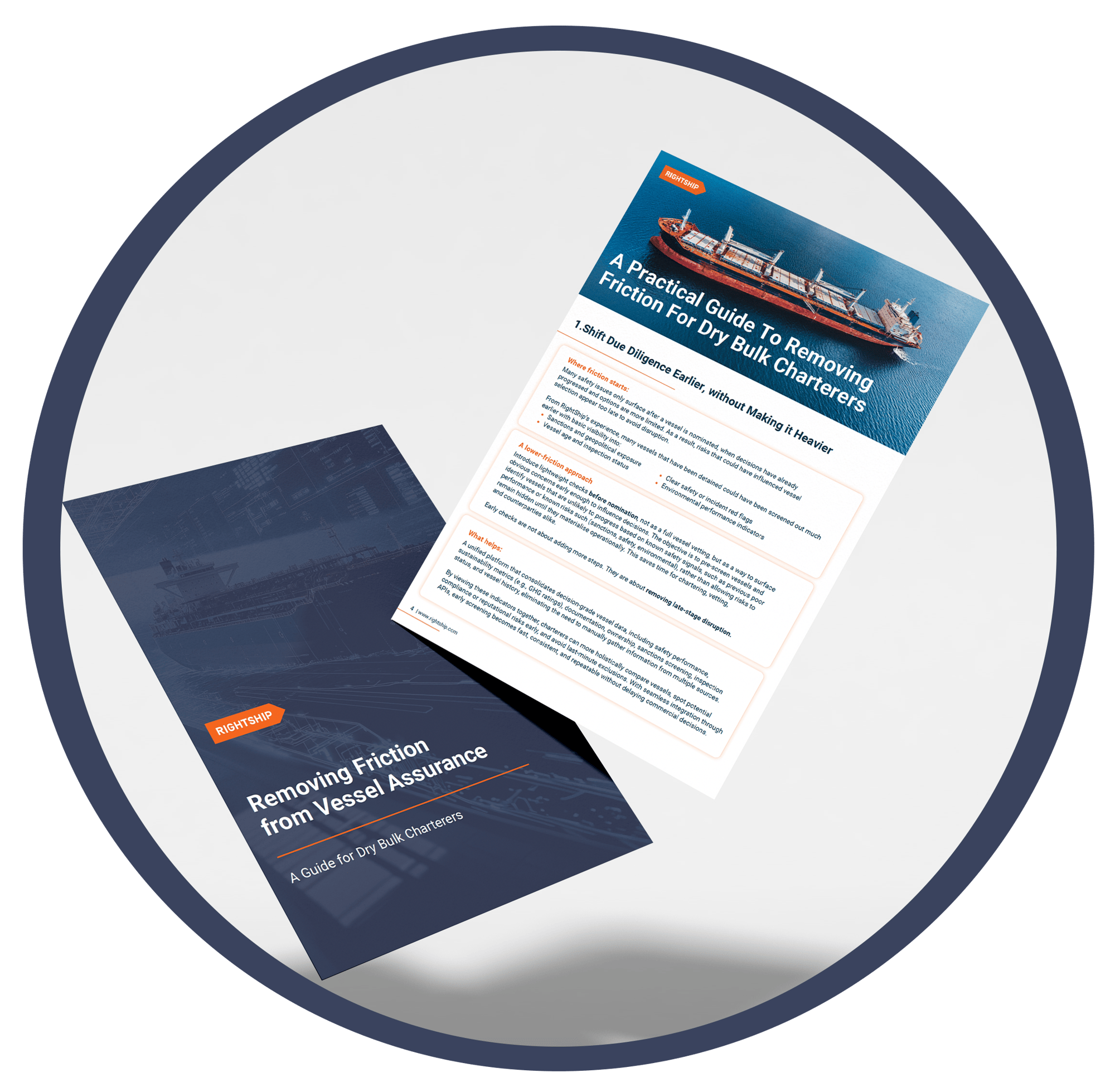
Removing Friction from Vessel Assurance
A Guide for Dry Bulk Charterers
Charterers today must assess vessel risk across safety, compliance, environmental performance, and sanctions exposure — often under tight commercial timelines. This guide explores how reducing operational friction in vessel evaluation and assurance processes can help teams move faster while maintaining control over risk and decision quality.
Fill out the form on this page to unlock the full guide.
What’s in the guide
Why friction builds in vessel evaluation and selection
Understand how fragmented systems, repeated checks, and scattered documentation slow vessel evaluation.
How to simply surface risks earlier in the process
Learn how lightweight screening before nomination can help identify unsuitable vessels sooner.
A practical vessel assurance checklist
A checklist charterers can use to spot process bottlenecks, streamline document handling, and maintain control over vessel risk decisions.
Why This Matters for Charterers?
Chartering teams are expected to evaluate vessel safety, compliance, sanctions exposure, environmental performance, and documentation — often under tight commercial timelines.
But when vessel information is spread across emails, spreadsheets, portals, and multiple providers, friction builds across the process.
This friction can lead to:
- Time spent chasing documents and inputs instead of assessing vessel risk
- Repeated checks across teams due to fragmented systems and processes
- Late-stage vessel exclusions that disrupt fixtures and commercial execution
- Inconsistent application of internal risk standards across chartering decisions