
Skip to content
A unified safety and risk intelligence platform, underpinned by trusted standards, rich maritime data and industry expertise, and enhanced by AI-enabled technology.

Latest release
New Class Status Review options
We’re introducing greater flexibility in how Class Status is reviewed as part of dry bulk vetting, supporting faster vetting decisions and giving customers greater choice over the level of review.

A unified safety and risk intelligence platform, underpinned by trusted standards, rich maritime data and industry expertise, and enhanced by AI-enabled technology.
Latest release
From Fragmented Data to Confident Decisions
A Dry Bulk Charterer's Practical Guide to Trusted, Decision-Grade Transparency in Vessel Due Diligence

A unified safety and risk intelligence platform, underpinned by trusted standards, rich maritime data and industry expertise, and enhanced by AI-enabled technology.
Latest Updates
Updated Vetting Baseline Criteria now available
RightShip has updated its Vetting Baseline Criteria to better align with current vetting practice, with targeted changes designed to simplify and clarify how vessel risk is assessed.

A unified safety and risk intelligence platform, underpinned by trusted standards, rich maritime data and industry expertise, and enhanced by AI-enabled technology.

RightShip Vessel Inspections

Maximise Safety with Comprehensive Vessel Inspections

RightShip’s Vessel Inspections help ship owners & managers enhance vessel's safety, sustainability, and compliance. Our RISQ inspections are designed to mitigate risks, improve operational performance, and adhere to industry best practices and international regulatory standards.

inspections-main-3
inspections-main tab-test
The Challenge

Navigating Risk and Compliance in a Fast‑Changing Maritime Landscape

Inconsistent Inspection Expectations Different charterers, terminals, and regions apply varying inspection standards—creating uncertainty and repeat inspections across the fleet.
Limited Visibility Into Vessel Risk Without independent, structured inspection insights, potential safety gaps may go unseen until they impact vetting outcomes or operational performance.
Unclear Findings, Limited Follow‑Through Inspection reports often lack clarity or prioritisation, making it difficult to translate findings into meaningful, fleet‑wide improvements.
WHY US

Enabling Safer Maritime Operations Through Proven Risk Control

TOUCH
Grid image Accredited Inspectors

All inspections are carried out by accredited inspectors trained to apply a standardised inspection methodology to deliver consistent evidence-based outcomes

Grid imageAccredited Inspectors

All inspections are carried out by accredited inspectors trained to apply a standardised inspection methodology to deliver consistent evidence-based outcomes

TOUCH
Grid image Clear, Actionable Safety Insights

Structured findings based on RISQ highlight key risk areas, helping you prioritise corrective actions and strengthen onboard safety and operational practices.

Grid imageClear, Actionable Safety Insights

Structured findings based on RISQ highlight key risk areas, helping you prioritise corrective actions and strengthen onboard safety and operational practices.

TOUCH
Grid image Smarter Maritime Risk Decisions

RightShip Inspections support smoother vetting decisions, allow for assessment of risk, preventative controls, and recommendations to assist key players across the maritime landscape.

Grid imageSmarter Maritime Risk Decisions

RightShip Inspections support smoother vetting decisions, allow for assessment of risk, preventative controls, and recommendations to assist key players across the maritime landscape.

RightShip Inspection Types

Built for Efficiency and Rigorous Assurance

Each inspection type is designed to meet your specific needs, ensuring both efficiency
and a thorough assessment of your vessel's condition, safety and compliance.
 
 Explore RightShip Inspections  →

Standard Inspection

A comprehensive, physical onboard assessment covering all relevant inspection questions. Average duration on board is between 10 - 12 hours.

Explore Standard Inspections  →

Recommended

Hybrid Inspection 

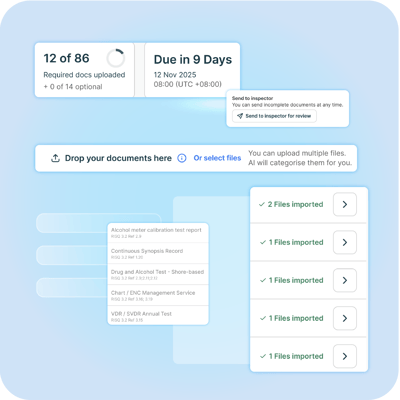
Managers can upload required documentation in advance, allowing inspectors to complete most of the review remotely. This reduces time on board to approximately 8 - 10 hours, making Hybrid ideal for short port stays while maintaining full RISQ compliance.
 

Dual Inspection

This involves two inspectors each covering their parts to complete all relevant questions during the physical inspection. Average duration on board is approximately 6 - 7 hours.

Explore Dual
Inspections  →

Hybrid Inspection

An Inspection Approach for Today’s Operational Pressures


HI-1

Built for Short Port Calls

Reduce onboard inspection time to approximately 8 - 10 hours—ideal for tight port schedules without compromising RISQ compliance.

HI-2


Less Disruption for Crew

Remote document review means fewer interruptions and reduced stress, keeping onboard operations running smoothly.

HI-3

Faster, Smoother Inspections

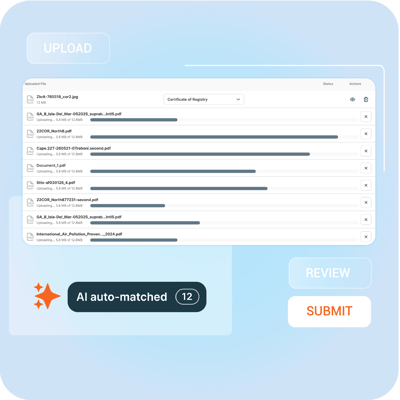
Early preparation via DMC (approx. 70%) of documents uploaded in advance plus timely hybrid uploads (approx. 30% of documents uploaded, 72 hours ahead) ensures clear, uninterrupted remote review and a more efficient inspection experience.


Planning for an Inspection

Successful RightShip inspections are built on preparation. Operators should submit inspection requests at least seven days in advance, with a 14-day lead time recommended to allow for vessel scheduling, inspector availability, and potential weather-related disruptions. Crew should be familiar with the latest RISQ requirements, key documentation should be organised and readily available, and critical machinery and safety equipment should be tested prior to the inspection. A well-prepared vessel helps minimise avoidable findings, supports an efficient inspection process, and demonstrates strong operational standards. 
main-tab-image3

The Maritime Industry, in Their Own Words

"The RightShip platform and support team have been invaluable to us as ship managers in improving our safety, compliance, and operational standards. The inspection process, vetting requirements, and follow-up guidance are practical and constructive — helping us identify gaps, strengthen our Safety Management System, improve PSC readiness, and build a stronger safety culture both onboard and ashore. We appreciate the team's professionalism and timely support when clarification is needed on inspection findings, platform access, or close-out submissions.."

Indochina Petroleum Transportation Jsc 

“RightShip remains the gold standard for maritime risk assessment and safety benchmarking. Their comprehensive vetting platform and rigorous inspection framework have significantly raised the bar for global ship operations. By providing transparent data on vessel condition, crew welfare, and operational history, they actively help managers mitigate risk and ensure safety is never compromised."

Pacific Ship Management Co. Ltd.


“RightShip has created a widely recognised benchmarking system that enables commercial stakeholders to compare vessels using standardised indicators and inspection outcomes. The platform has become an influential tool in chartering decisions and encourages operators to maintain high standards of compliance and performance.”

Intermaritime Shipmanagement Ltd.


“Since working with RightShip, vessel safety systems have significantly improved. As a seafarer, I have witnessed positive changes in vessel maintenance, crew training, and crew awareness — all of which have enhanced vessel safety, operational standards, and overall performance.”

Synergy Navis Marine Pvt Ltd


“RightShip plays an important role in enhancing vessel standards and promoting compliance with international conventions and industry requirements. The platform supports seafarer competency and operational standards, contributing to safer vessel operations, cargo handling, and overall maritime efficiency."

Pacific Ship Management Co. Ltd.


“Access to the RightShip platform has been a significant advantage for monitoring our fleet’s overall performance. The Global RightShip Inspection Dashboard provides a valuable benchmark against peer vessels, and proactive prompts for PSC inspections and closures further enhance our compliance readiness.”

Tolani Shipping Company Limited


“I view RightShip not just as a compliance check, but as valuable partner in guiding our safety and maintenance standards in the right direction. Rigorous inspections genuinely drive meaningful improvements.”

V. Ships


“RightShip is highly valued for the professionalism, responsiveness, and consistent support provided by the team. The platform remains an important tool for promoting safety, transparency, and continuous improvement across the maritime industry. We particularly value the prompt communication, cooperative approach during inspections and reviews, and the willingness of staff to provide guidance and clarification whenever needed.”

Sea Traders SA


Frequently Asked Questions

What is the purpose of RightShip Inspections?

To enhance safety and transparency across the maritime supply chain by providing an objective assessment of vessel standards.

Inspection outcomes are used to:

  • Support vetting decisions by reinforcing desktop assessments with on-board verification.

  • Identify gaps between a vessel’s Safety Management System and actual practices.

  • Promote continuous improvement by encouraging operators to align with best practice standards beyond regulatory compliance.

Ultimately, the programme contributes to RightShip’s objective of improving safety performance and reducing risk across the industry.

How are RightShip Inspections used within vetting and Safety Score?

RightShip Inspections play a key role within the vetting process and Safety Score framework.

  • A valid inspection strengthens vetting outcomes, providing confidence in vessel condition and management practices.

  • Where an inspection is required but not available, it can directly impact the vetting outcome (e.g. delays or an “unacceptable” status where no inspection is booked).

  • Inspection outcomes (including findings and validity) are considered alongside vessel performance indicators such as PSC history and incidents to inform overall risk assessment.

This integration ensures that inspection results are not standalone, but part of a holistic, risk-based evaluation of vessel quality and safety performance.

Related Articles

RightShip Greece Forum 2026
12 May 2026RightShip Greece Forum 2026: Advancing RightShip Inspections

Session 5 at Turning Data Into Trust: Redefining Maritime Safety Through Data, Trust and Collaboration — RightShip's Inaugural Forum in Greece, held in partnership with Posidonia 2026! 

READ MORE → 

Hybrid Inspection
04 December 2025The Hybrid Advantage: A Smarter Way to Balance Time, Compliance, and Crew Welfare

Learn how Hybrid Inspections blend remote review with focused onboard checks to save time, support crew welfare, and maintain a consistent, compliant process.

READ MORE → 

Advancing Vessel Safety DeepDive Blog Thumbnail - 26 November
26 November 2025RightShip Deep Dive | Advancing Vessel Safety: An Update to RISQ 3.2 and RightShip Inspections

This Deep Dive webinar explores the latest updates to the RightShip’s Inspection Ship Questionnaire (RISQ), recent inspection trends, and the growing role of hybrid inspection.

READ MORE → 

Understand RightShip Vessel Inspection Process and Outcomes