Skip to content
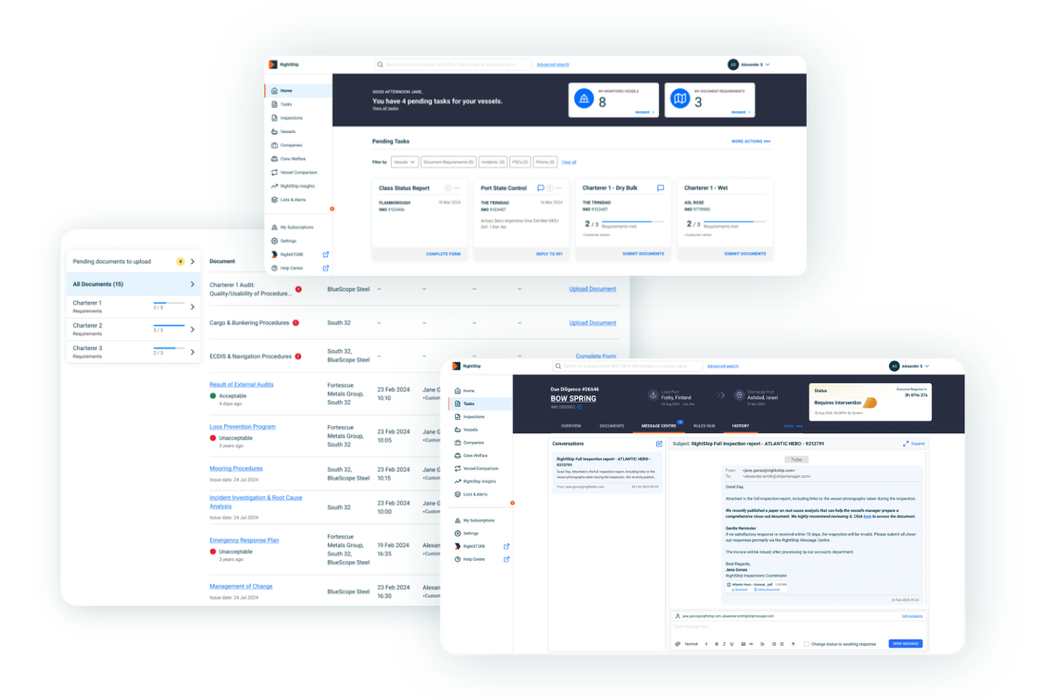
A unified safety and risk intelligence platform, underpinned by trusted standards, rich maritime data and industry expertise, and enhanced by AI-enabled technology.

Latest release
New Class Status Review options
We’re introducing greater flexibility in how Class Status is reviewed as part of dry bulk vetting, supporting faster vetting decisions and giving customers greater choice over the level of review.

A unified safety and risk intelligence platform, underpinned by trusted standards, rich maritime data and industry expertise, and enhanced by AI-enabled technology.
Latest release
From Fragmented Data to Confident Decisions
A Dry Bulk Charterer's Practical Guide to Trusted, Decision-Grade Transparency in Vessel Due Diligence

A unified safety and risk intelligence platform, underpinned by trusted standards, rich maritime data and industry expertise, and enhanced by AI-enabled technology.
Latest Updates
Updated Vetting Baseline Criteria now available
RightShip has updated its Vetting Baseline Criteria to better align with current vetting practice, with targeted changes designed to simplify and clarify how vessel risk is assessed.

A unified safety and risk intelligence platform, underpinned by trusted standards, rich maritime data and industry expertise, and enhanced by AI-enabled technology.

RightShip Safety Score

The RightShip Safety Score provides a transparent and standardised measure of vessel performance,
rating vessels on a scale from 0 to 5. 

Understanding RightShip Safety Score

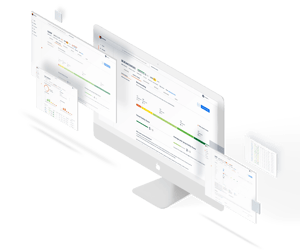
The Safety Score is built using 6 sub-scores and more than 20 safety considerations, it benchmarks historical vessel performance across incidents, PSC Inspection outcomes, DOC company performance, class, and flag data. Designed as the first step in the risk management process, the Safety Score helps owners, charterers, ports, terminals, and other stakeholders assess vessel performance against a consistent global standard.
Safety score-MAIN
Key Advantages

Why the Industry Trusts RightShip Safety Score


safety-score-1-11

Transparent and Explainable

Every score is supported by clearly defined sub-scores, visible scoring rules, and documented paths to resolution, providing greater transparency into how vessel performance is assessed.


safety-score-2-12

Clear and Consistent Benchmarking

A standardised 0–5 scoring framework enables objective comparison across the global fleet, helping stakeholders assess vessel performance against a consistent industry benchmark.


safety-score-3-13

Built for Greater Accuracy

Combining verified maritime data, expert review, and industry feedback, the model provides a balanced and credible assessment of historical safety performance.


safety-score-4-14

Drives Continuous Safety Improvement

Detailed sub-scores and performance indicators help identify opportunities for improvement, encouraging stronger safety outcomes and higher standards across the industry.


safety-score-5-15

Dynamic and Relevant

Periodic recalibration ensures the model reflects evolving safety trends, operational performance patterns, and changes across the global fleet.


Frequently Asked Questions

How is the Safety Score calculated?

The score is determined by evaluating a vessel against a series of industry-standard safety rules and six sub-scores based on five years of operational history. If no critical rules are triggered, the model assigns a score based on relative performance.  

What happens when a Safety Score System Rule is triggered? When a Safety Score System Rule is triggered — due to events such as incidents, PSC detentions or no valid RightShip inspection— the vessel will be restricted to a score of 1/5 or 2/5. To resolve the restriction, and allow progress to a higher score, vessel operators must take action in accordance with the stated resolution option(s) which may also include a formal review by RightShip personnel.
How does RightShip ensure the data is accurate?

RightShip collects data from multiple global sources and employs automated cleansing processes alongside expert analysis to resolve conflicts and maintain a high standard of data integrity.  

Is there any benefit to proactively reporting an incident?

Yes. When a vessel operator pro-actively reports an incident that is not already on the Platform, the company’s DOC Score will receive a relative reward. This reward is realised through a reduced DOC Score impact for proactively reported (transparent) incidents, with an approximate 40% lower immediate impact relative to non-proactively reported incidents, before converging with the standard decay profile over time.

Related Articles

30 April_Promotion Hybrid
12 May 2026RightShip Greece Forum 2026: Advancing RightShip Inspections

Session 5 at Turning Data Into Trust: Redefining Maritime Safety Through Data, Trust and Collaboration — RightShip's Inaugural Forum in Greece, held in partnership with Posidonia 2026! 

READ MORE → 

 

RightShip Deep Dive
30 July 2025RightShip Deep Dive | RightShip Safety Score: PSC Deficiency Severity and Model Improvements

Whether you're seeking actionable intel or looking to clarify complex issues, Deep Dives are your go-to resource for staying informed and engaged.  

READ MORE → 

 

Copy of age trigger - blog
11 December 2024Revised RightShip Inspection Age Trigger: What It Means for Owners, Managers, and Charterers

This article has been updated to reflect the simplified Age Trigger implementation timeline (Phases 2-4), including updates to the Phase 4 activation age and implementation date.

READ MORE → 

Drive Accountable and Transparent Safety Standards

Learn how our structured framework applies a transparent methodology to deliver
a standardised measure of operational excellence across the maritime industry.