
Skip to content
A unified safety and risk intelligence platform, underpinned by trusted standards, rich maritime data and industry expertise, and enhanced by AI-enabled technology.

Latest release
New Class Status Review options
We’re introducing greater flexibility in how Class Status is reviewed as part of dry bulk vetting, supporting faster vetting decisions and giving customers greater choice over the level of review.

Discover how RightShip supports the unique safety, risk management and assurance needs of different industries across the maritime value chain.
Latest release
From Fragmented Data to Confident Decisions
A Dry Bulk Charterer's Practical Guide to Trusted, Decision-Grade Transparency in Vessel Due Diligence


Latest release
New Class Status Review options
We’re introducing greater flexibility in how Class Status is reviewed as part of dry bulk vetting, supporting faster vetting decisions and giving customers greater choice over the level of review.

Discover RightShip’s intelligence, data and workflow solutions that help businesses strengthen safety, manage risk and realise commercial value.
Discover the frameworks that underpin RightShip’s solutions, helping maritime businesses assess safety performance, manage risk and drive continuous improvement.
Latest Updates
Updated Vetting Baseline Criteria now available
RightShip has updated its Vetting Baseline Criteria to better align with current vetting practice, with targeted changes designed to simplify and clarify how vessel risk is assessed.

Explore RightShip’s latest insights, industry perspectives and practical resources to stay informed, deepen your knowledge and get the support you need.

Due Diligence Hub

Marine Assurance Workflows for Defensible Risk Decisions

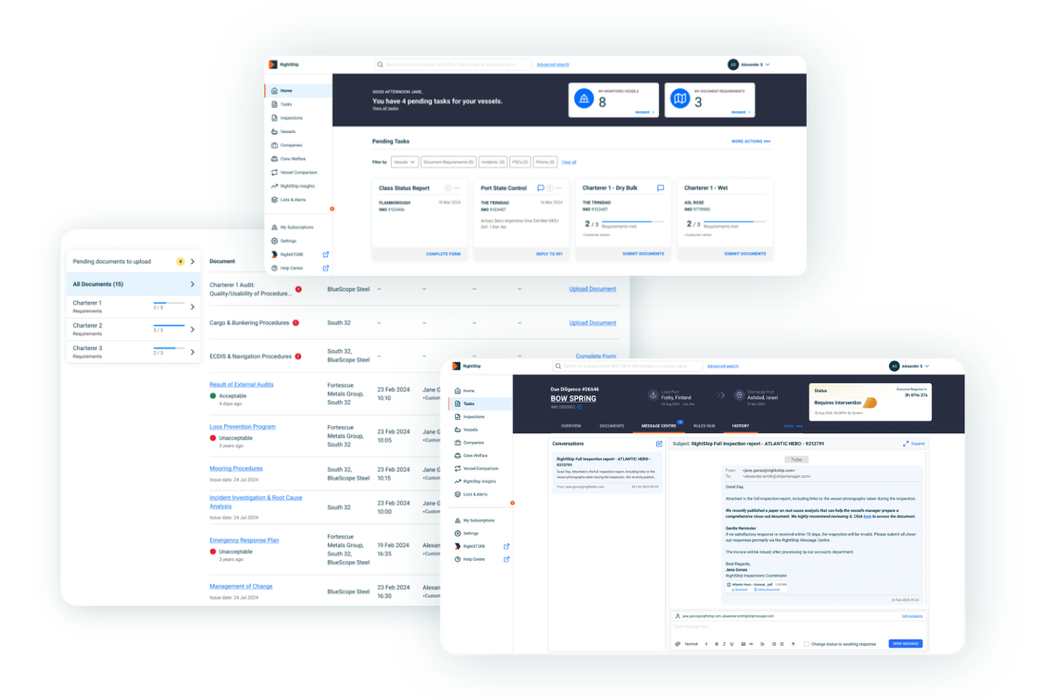
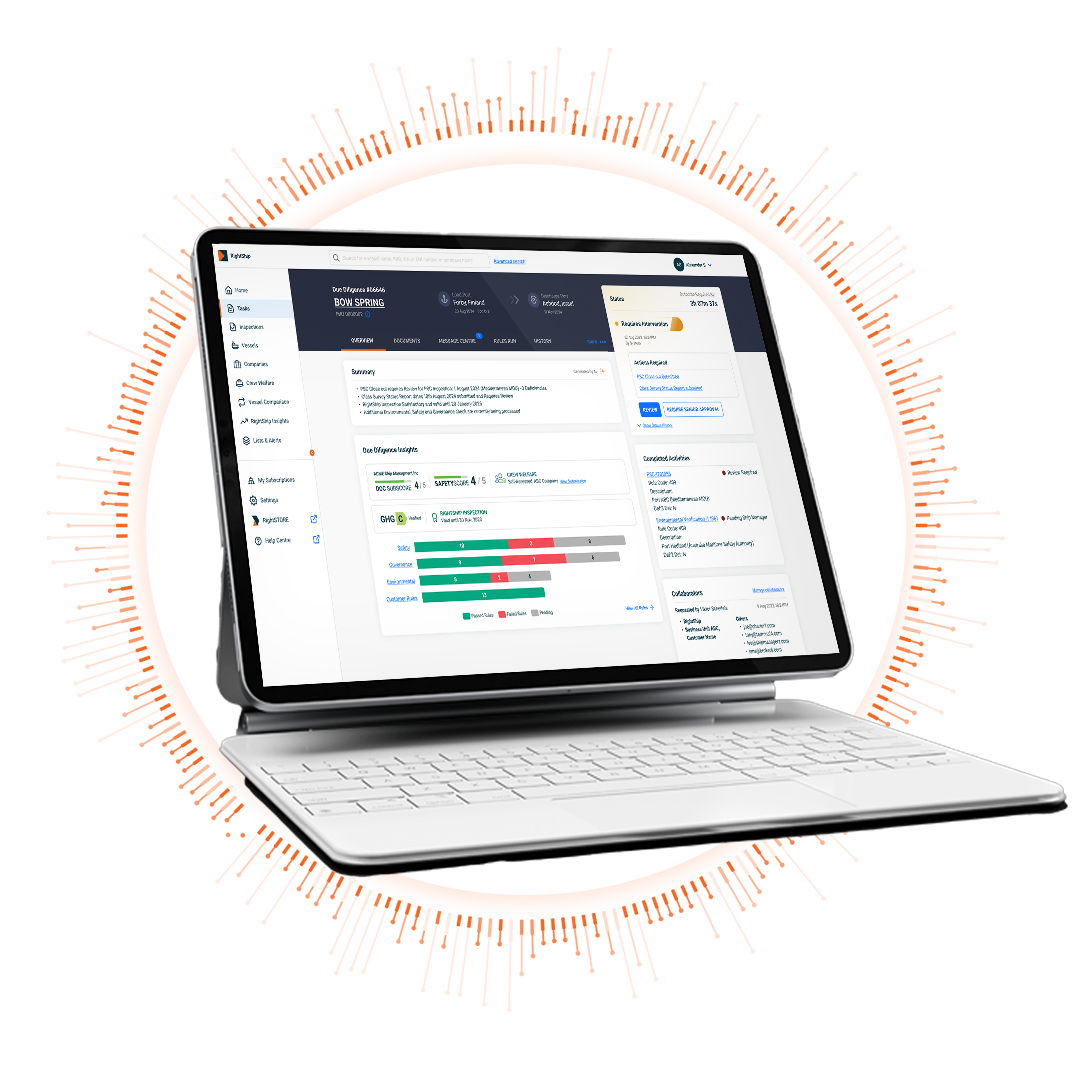
Due Diligence Hub is a configurable workflow solution that helps charterers, traders, and terminals manage vessel risk evaluations with greater consistency and control. By automating manual checks, centralising documentation, and applying organisation-specific risk criteria, teams can streamline approvals and make faster, more informed decisions.

DDH-image3
Secondary image-website copy
The Challenge

Complexities of Vessel Assurance Process

Manual Clearance Processes Slow Decisions Vessel evaluations often rely on manual reviews, disconnected systems, and repetitive checks, creating unnecessary effort and slowing approval timelines.
Fragmented Information Reduces Visibility Critical vessel information is frequently spread across emails, spreadsheets, and multiple platforms, making it difficult to maintain a complete view of risk.
Limited Collaboration Creates Bottlenecks Without a structured workflow, communication between stakeholders can become fragmented, delaying decisions and reducing confidence in vessel approvals.
WHY US

Vessel Risk Management That Improves Efficiency and Decision-Making

TOUCH
Grid image Improve Efficiency Across Assurance Workflows

Automate repetitive checks and streamline vessel evaluations to reduce administrative burden and accelerate approval timelines.

Grid imageImprove Efficiency Across Assurance Workflows

Automate repetitive checks and streamline vessel evaluations to reduce administrative burden and accelerate approval timelines.

TOUCH
Grid image Strengthen Consistency and Governance

Standardise risk assessments and approval processes to support more transparent, repeatable, and defensible vessel decisions.

Grid imageStrengthen Consistency and Governance

Standardise risk assessments and approval processes to support more transparent, repeatable, and defensible vessel decisions.

TOUCH
Grid image Gain Greater Flexibility and Control

Tailor workflows, risk criteria, and approval requirements to align with your organisation's operating model and risk appetite.

Grid imageGain Greater Flexibility and Control

Tailor workflows, risk criteria, and approval requirements to align with your organisation's operating model and risk appetite.

Key Advantages

Configurable Workflows for Efficient Vessel Risk Management


DDH-1-54

Customise Risk Criteria and Requirements

Configure risk criteria, document requirements, and red flag alerts to align vessel evaluations with your organisation's policies and risk appetite.
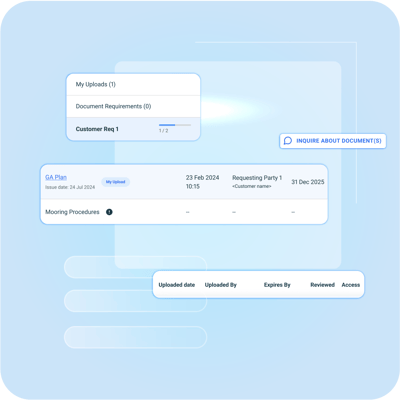

DDH-2_ddh

Centralise Documentation and Approvals

Manage vessel documentation, forms, approvals, and supporting evidence in one place to improve visibility and reduce administrative effort.
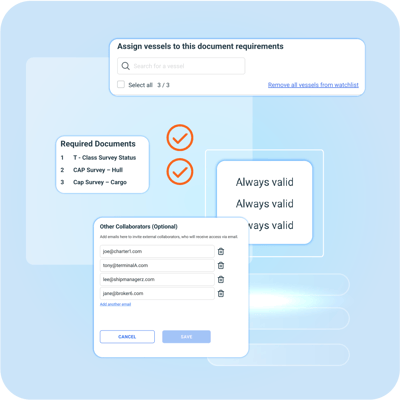

DDH-3_ddh2

Adapt Workflows to Your Process

Configure approval pathways and evaluation workflows to reflect your operational requirements and maintain control over the clearance process.

DDH-4_dh

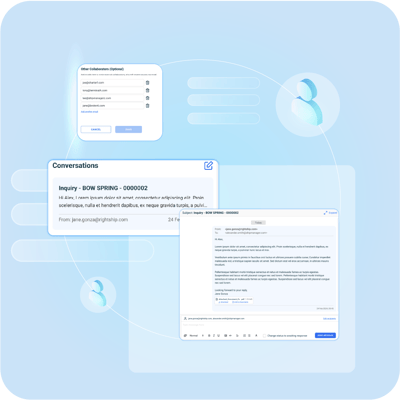
Collaborate Across Stakeholders

Communicate directly with ship owners, managers, brokers, and internal teams through a shared workflow that keeps everyone aligned.

DDH-5-30

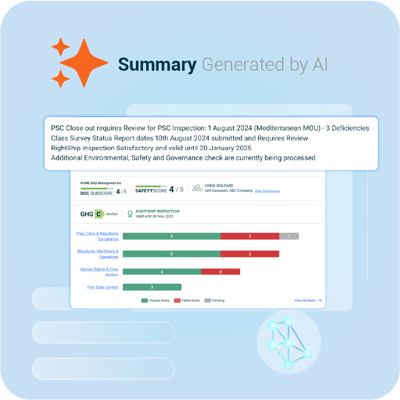
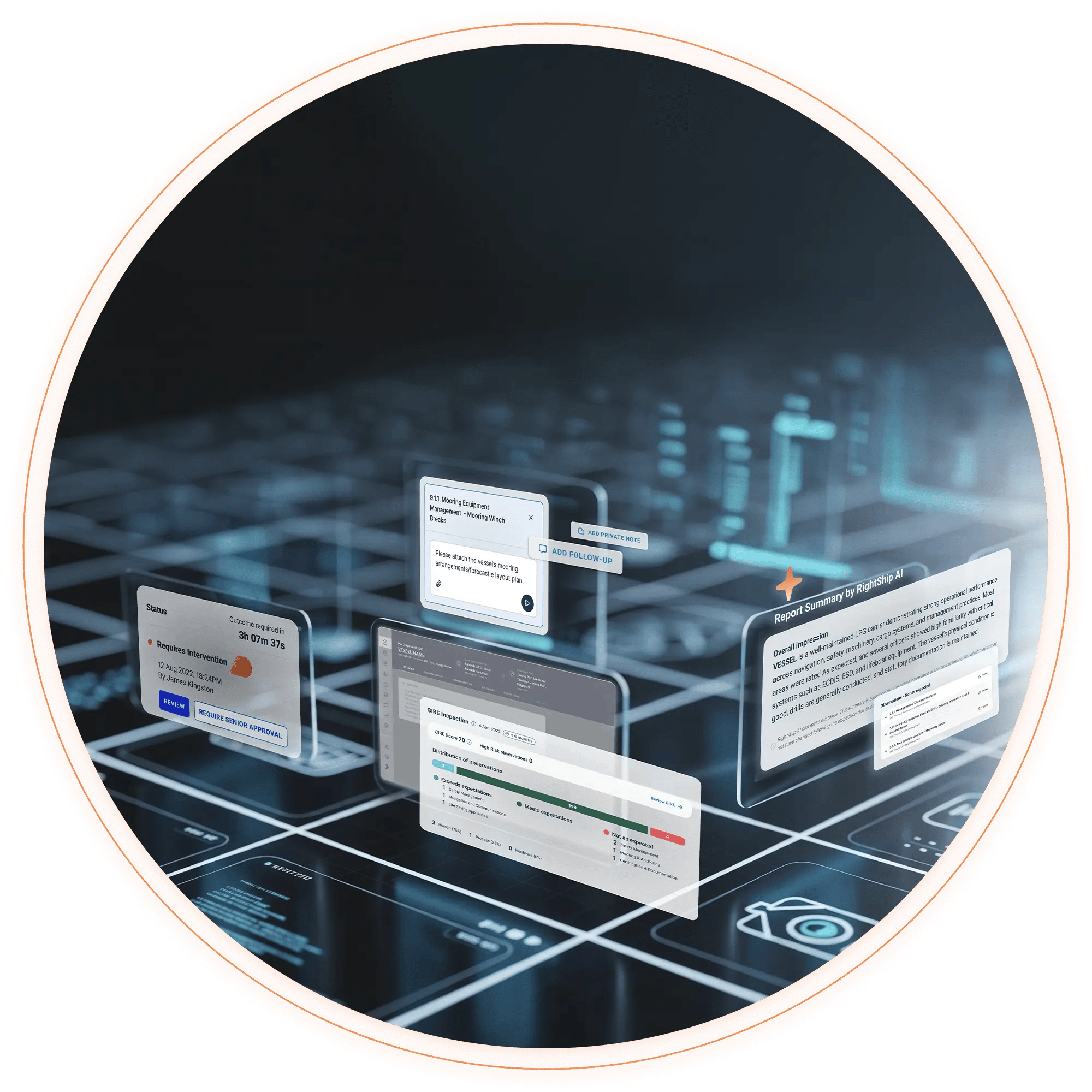
Automate Repetitive Due Diligence Checks

Leverage AI-powered automation and trusted maritime intelligence to streamline routine checks and support faster, more consistent vessel decisions.

DDH-secondary-oil&gas
The Challenge

The Cost of Delayed and Fragmented Marine Assurance

Time-Consuming Vessel Assessments Marine assurance teams must review extensive vessel information and supporting documentation under tight trading deadlines. Repetitive checks and manual reviews consume valuable time and resources, slowing clearance decisions.
Fragmented Information and Risk Visibility Critical vessel information is scattered across multiple systems, documents and communications. This makes it harder to identify emerging risks, apply acceptance criteria consistently and maintain clear records of assurance decisions.
Significant Commercial and Operational Exposure Delayed or rejected vessel clearances can result in millions in potential commercial exposure through lost fixtures, missed trading opportunities and terminal disruptions, affecting cargo movements, trading schedules and supply chain reliability.
WHY US

Trusted Intelligence for Faster, More Defensible Marine Assurance Decisions

TOUCH
Grid image Trusted Maritime Risk Intelligence

Draw on > 1Tr maritime data points, 42,000+ annual assurance decisions and martime expertise to support more informed marine assurance decisions.

Grid imageTrusted Maritime Risk Intelligence

Draw on > 1Tr maritime data points, 42,000+ annual assurance decisions and martime expertise to support more informed marine assurance decisions.

TOUCH
Grid image Improve Efficiency with AI-Assisted Automation

Automate routine checks and accelerate vessel assessments with AI-assisted reviews, reducing manual effort and prioritising exceptions for expert judgement.

Grid imageImprove Efficiency with AI-Assisted Automation

Automate routine checks and accelerate vessel assessments with AI-assisted reviews, reducing manual effort and prioritising exceptions for expert judgement.

TOUCH
Grid image Strengthen Assurance Governance and Control

Apply your organisation's risk appetite and acceptance criteria consistently, with traceable decision records and expert intervention when required.

Grid imageStrengthen Assurance Governance and Control

Apply your organisation's risk appetite and acceptance criteria consistently, with traceable decision records and expert intervention when required.

Key Advantages

AI-Enabled Workflows for Faster, More Consistent Marine Assurance

DDH-WET1-46


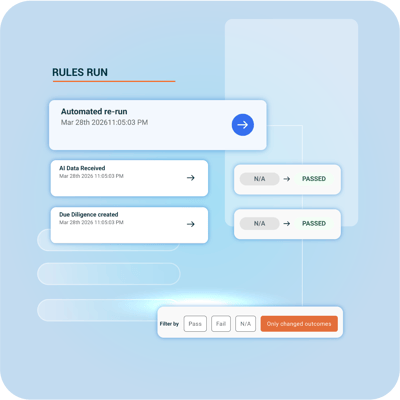
Accelerate Assurance Decisions 

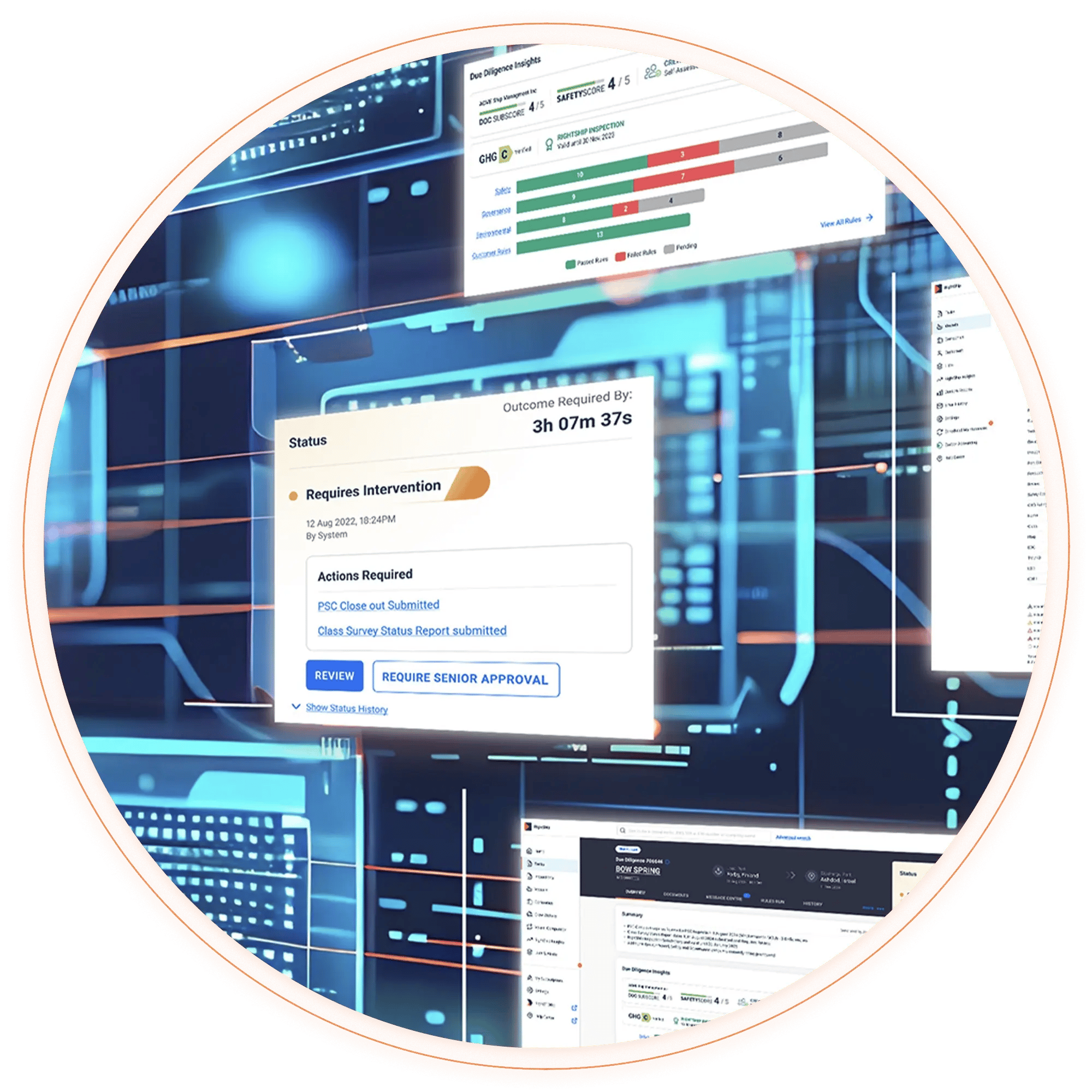
Reduce routine processing time with AI-assisted evidence reviews, earlier visibility of clearance requirements and centralised communications to meet trading deadlines.

DDH-WET2-47


Apply Your Risk Appetite Consistently

Configure acceptance criteria to reflect your organisation's risk appetite, vessel types, cargoes and trading requirements, with exceptions escalated for expert review.

DDH-WET3-48


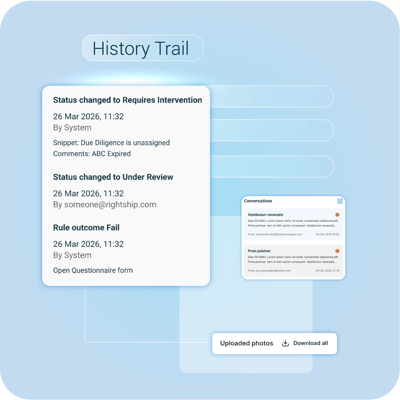
Maintain a Complete Assurance Record

Keep supporting evidence, assessment outcomes, approvals and time-stamped decision histories in one place to strengthen accountability, traceability and governance.

DDH-WET4-49


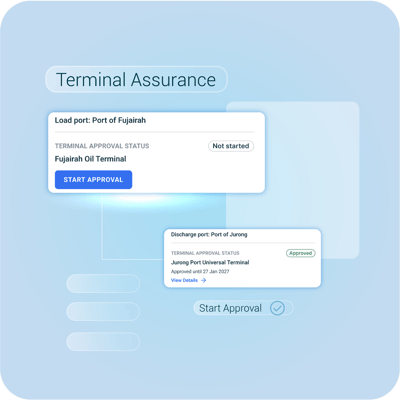
Manage Vessel and Terminal Assurance Together

Bring vessel assessments and terminal approval requirements into one workflow, with visibility of approval status, upcoming renewals and potential operational constraints.


The Maritime Industry, in Their Own Words

“RightShip has created a widely recognised benchmarking system that enables commercial stakeholders to compare vessels using standardised indicators and inspection outcomes. The platform has become an influential tool in chartering decisions and encourages operators to maintain high standards of compliance and performance.”

Intermaritime Shipmanagement Ltd.


“RightShip plays an important role in enhancing vessel standards and promoting compliance with international conventions and industry requirements. The platform supports seafarer competency and operational standards, contributing to safer vessel operations, cargo handling, and overall maritime efficiency."

Pacific Ship Management Co. Ltd.


“RightShip is highly valued for the professionalism, responsiveness, and consistent support provided by the team. The platform remains an important tool for promoting safety, transparency, and continuous improvement across the maritime industry. We particularly value the prompt communication, cooperative approach during inspections and reviews, and the willingness of staff to provide guidance and clarification whenever needed.”

Sea Traders SA


Frequently Asked Questions

How is Due Diligence Hub different from your traditional vetting service?

Traditional vetting is a service we provide — we conduct the risk assessment and deliver a RightShip outcome. 

The Due Diligence Hub is a workflow tool that enables you to run your own due diligence process internally, using your own risk criteria and workflows.

Do I need to choose between Due Diligence Hub and RightShip Vetting? No — these solutions are designed for different situations and can work together to fit your specific risk management approach.
How is this different from what we already use internally?

Many internal processes rely on a combination of email, spreadsheets, siloed documents, and informal communication channels. 

The Due Diligence Hub consolidates and structures the due diligence process in one platform. On top of that, it also has automations, real-time tracking and most importantly, integrated access to RightShip’s trusted data.  

How is the data sourced and verified?

The data within the Due Diligence Hub is sourced from a combination of trusted external providers—including AIS data, S&P Global, and IHS—as well as directly from ship owners and managers. Once collected, this information is rigorously verified by our in-house subject matter experts to ensure accuracy, relevance, and reliability. This two-tiered approach—combining credible data sources with expert validation—ensures that users can make confident, well-informed decisions based on high-quality insights.

Related Articles

The Human Factor in the Age of AI Blog Thumbnail
19 November 2025The Human Factor in the Age of AI: Strengthening Supply Chain Risk Management Through Agentic Intelligence

Discover how Agentic AI strengthens maritime safety, streamlines due diligence, and supports human expertise in high-stakes decision-making.

READ MORE → 

Insight Banner - AI and Tech
15 October 2025How AI is shaping the future of risk management

Discover how AI transforms risk management with predictive detention models, smart PSC preparation, and due diligence to boost efficiency and compliance. 

 

READ MORE → 

DDH-image1
10 July 2025Press Release: RightShip Unveils AI-Enabled Workflow Tool to Transform Risk Management

DDH is purpose-built for charterers with in-house vetting or risk assurance teams who want to stay in full control of their risk management decisions more efficiently.

READ MORE → 

sanctions-blog
10 July 2025What Delays Can Really Cost Charterers

In 2024, more than 12,540 days were lost to vessel detentions,  revealing just how costly even one disruption can be in today’s high-risk market.

READ MORE → 


Experience Efficient and Data-Driven Due Diligence Today!

Join the growing number of charterers who are staying firmly in control of their vessel evaluation and risk management process.